



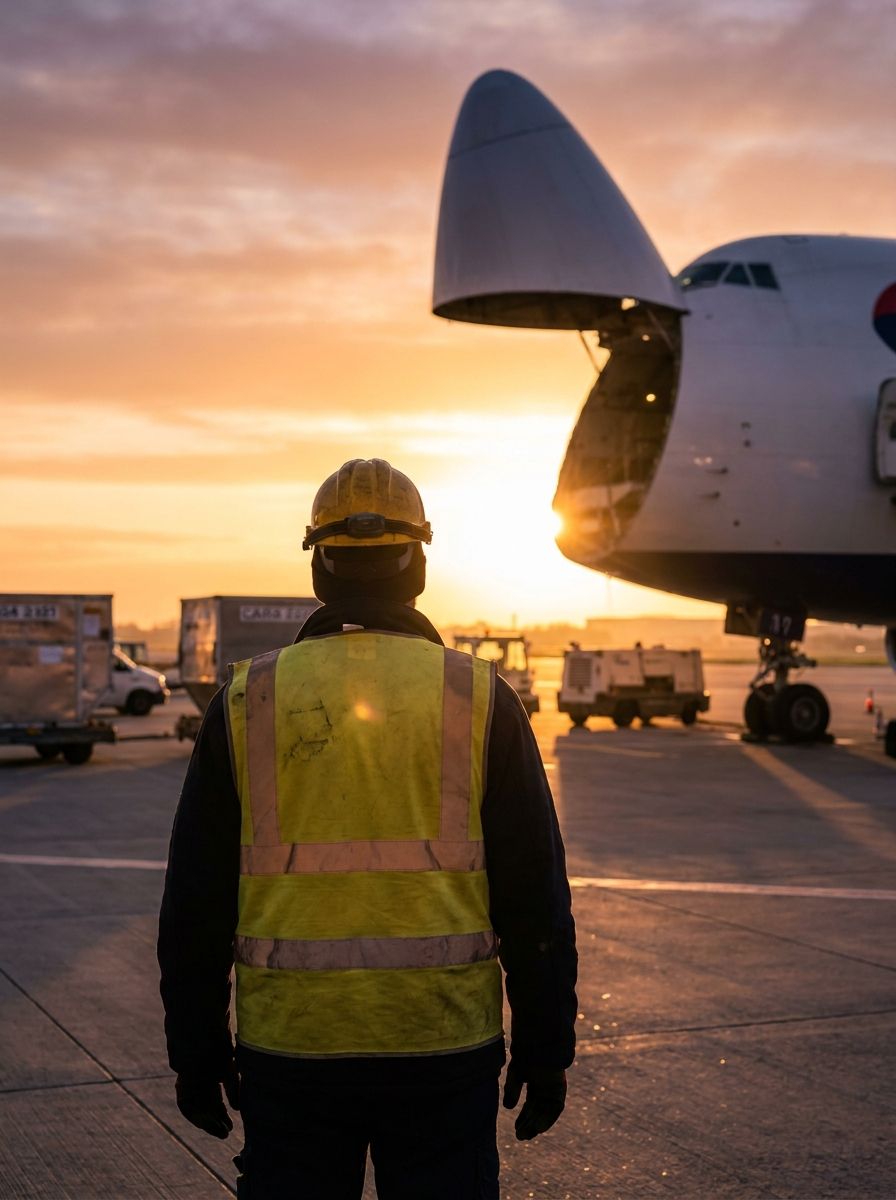

Floor Loading Limits: A Practical Guide for Air Freight Logistics
Learn how to correctly calculate aircraft floor loading when shipping heavy cargo to Kazakhstan with KAZLOGIST.KZ to avoid damage and loading rejections.

Why Weight is Not the Only Critical Parameter
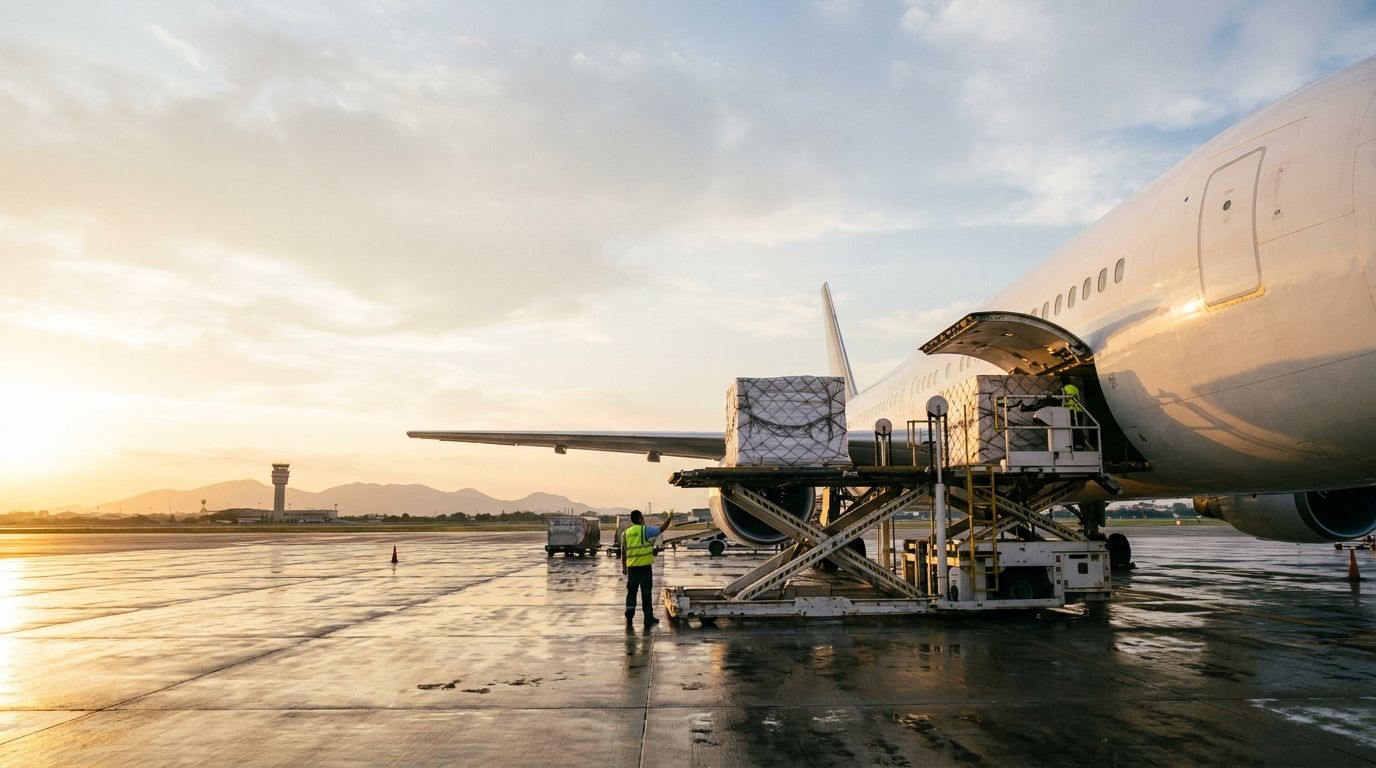
When organizing air freight for heavy equipment or dense materials to Kazakhstan via KAZLOGIST.KZ, specialists often encounter the concept of Floor Loading Limits. For a procurement officer or business owner, this might seem like an unnecessary technical detail, but ignoring this parameter leads to serious financial losses. If the cargo pressure per square meter of the floor exceeds the airline's allowable standards, loading will be rejected at the last moment, or expensive repacking at the airport will be required.
What are Floor Loading Limits
Every aircraft has structural limitations regarding floor strength. Load is measured in kilograms per square meter (kg/m²) or pounds per square inch (PSI). The essence is simple: if you are carrying 500 kg of cotton wool, it is distributed over a large area and creates no problems. But if the same 500 kg is a steel part with a small base area, it could literally punch through the aircraft floor. KAZLOGIST.KZ always verifies these parameters during the booking stage, especially for industrial equipment from China, Europe, or the USA.
How to Calculate the Load Yourself
For a preliminary assessment, you can use a simple formula: Weight of one cargo piece / (Base Length × Base Width). For example, if your crate weighs 1200 kg and has a base of 1 meter by 1 meter, the load will be 1200 kg/m². If the limit of a specific aircraft (e.g., a narrow-body aircraft operating flights from Turkey) is 750 kg/m², such cargo will not be accepted without special measures. It is important to remember that the airline calculates the cost based on the greater of the actual and volumetric weight. As a reminder, volumetric weight at KAZLOGIST.KZ is calculated as: Length × Width × Height (cm) / 6000.
Load Distribution Methods (Shoring)
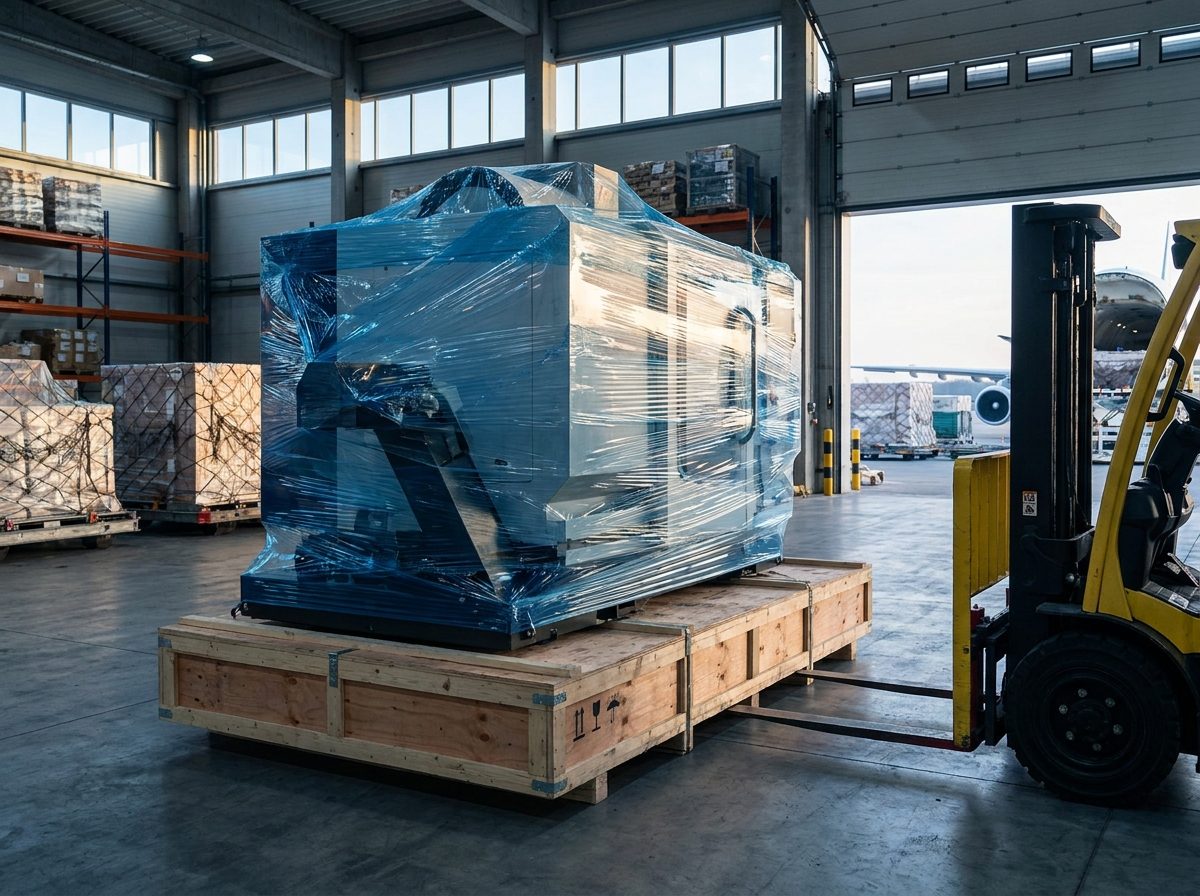
If the calculation shows an exceedance of limits, it does not mean the cargo cannot be sent by plane. KAZLOGIST.KZ logisticians apply the Shoring method — the use of distribution boards or wooden beams. By placing the cargo on sturdy wooden planks that extend beyond its base dimensions, we increase the contact area with the aircraft floor. This reduces the pressure to acceptable levels. For air freight from Europe or China, we pre-coordinate the securing and weight distribution scheme with the partner airline to avoid delays.
What to Look for When Preparing Documents
To accurately calculate floor loading, we will need precise data from the packing list. It should specify not only the total weight but also the dimensions of each piece, as well as the presence of legs or supports on the equipment. If the cargo has a specific shape, it is advisable to provide a drawing or a photo report from the warehouse. KAZLOGIST.KZ takes on the verification of the document package, including the invoice with HS codes and the air waybill (AWB), before the flight departs. This is critical for imports to Kazakhstan so that the cargo does not get stuck at the terminal due to technical discrepancies.
Delivery Times and Geography
We deliver cargo to Kazakhstan from anywhere in the world. Estimated times are: from Europe — 3–5 days, from China and Asia — 3–6 days, from the Middle East — 2–4 days, from the USA — 5–8 days. Urgent shipments are possible in 2–3 days if space is available on the flight. The period is counted from the cargo's departure from the sender's warehouse to its release at the destination airport in Almaty or other cities. Door-to-door delivery usually adds 1 day to the total time.
If you are planning to transport heavy or oversized cargo, contact a KAZLOGIST.KZ manager for an accurate calculation of load distribution and shipping costs.