

What an AWB is and why the air waybill matters
The air waybill (AWB) is the core transport document for air cargo. What procurement and logistics teams should check, where customs delays start, and how KAZLOGIST issues the AWB for shipments into Kazakhstan.
What an AWB is in practice
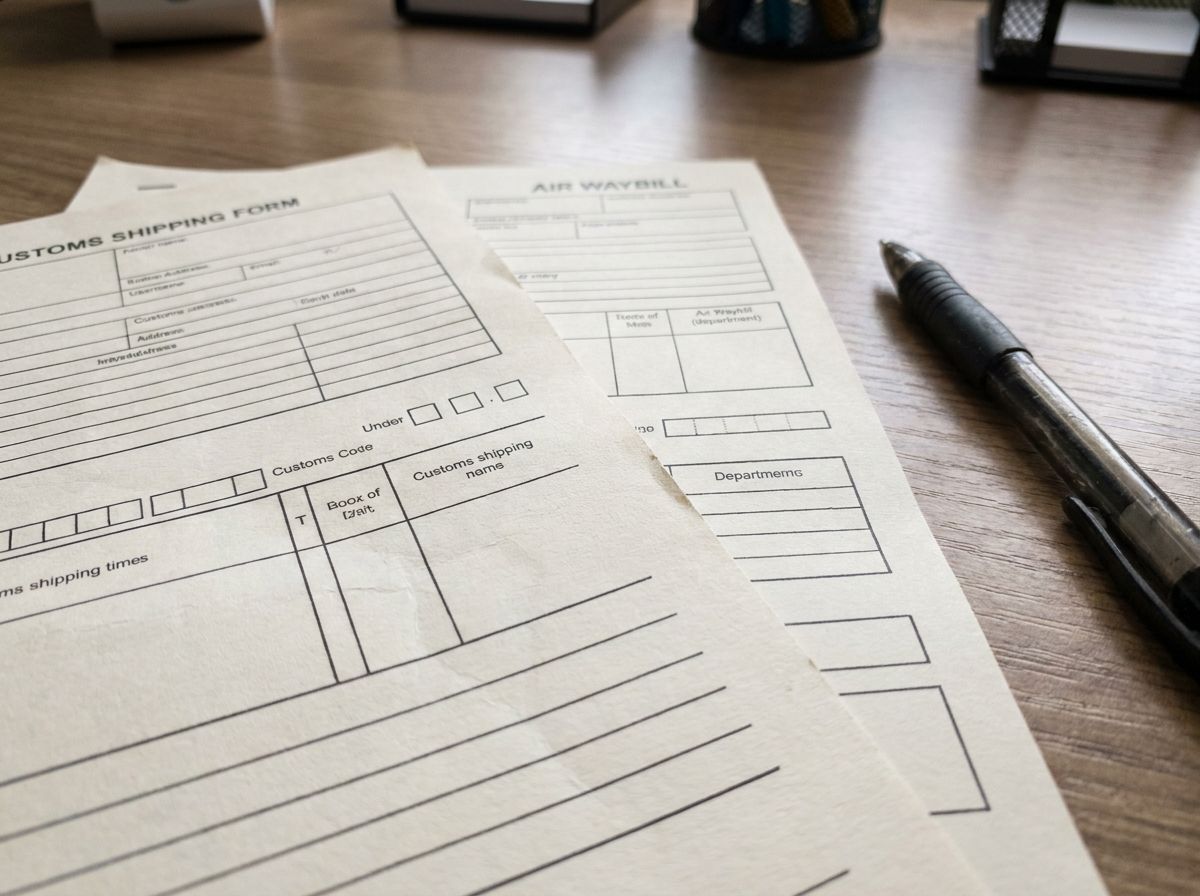
An AWB (Air Waybill) is the air consignment note: the contract of carriage between the shipper and the airline (or its agent) and the receipt that the cargo has been accepted for transport. Without an AWB the cargo will not be boarded, will not clear export in the origin country, and will not be released at the airport of destination in Kazakhstan. For a buyer or logistics lead it is not an “airline form” — it is the document used to match pieces, weight, routing and consignee.
In practice there are two layers. A Master AWB (MAWB) is issued by the airline or its agent for the whole lot moving under one booking. A House AWB (HAWB) is issued by the forwarder when the shipment is consolidated. If you moved as consolidation, the consignee in Kazakhstan usually needs both numbers for release. Mixing up MAWB and HAWB is a typical reason the cargo “exists in the airline system” but the airport warehouse will not release it against your number.
Who issues it and what must be on the waybill
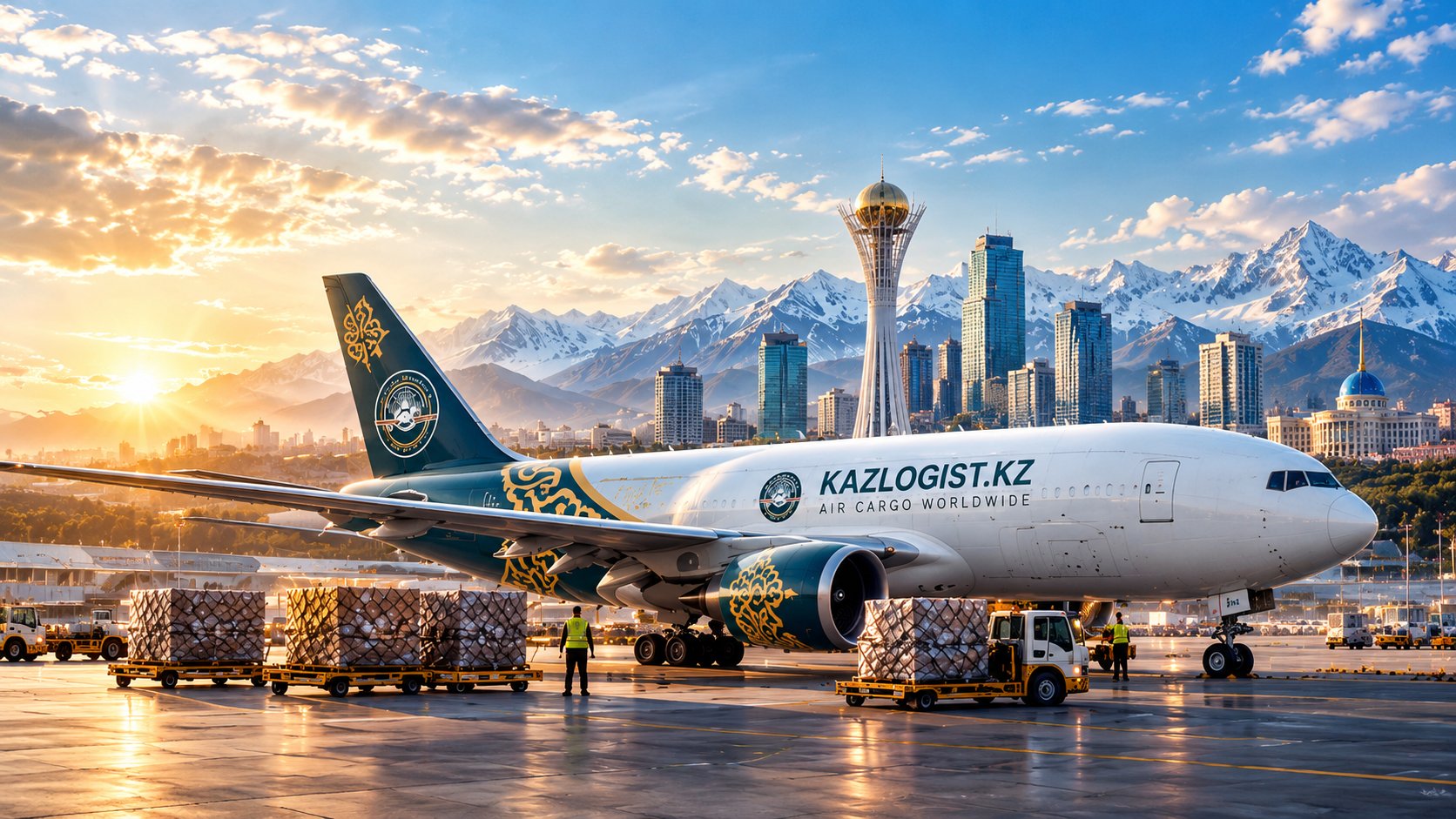
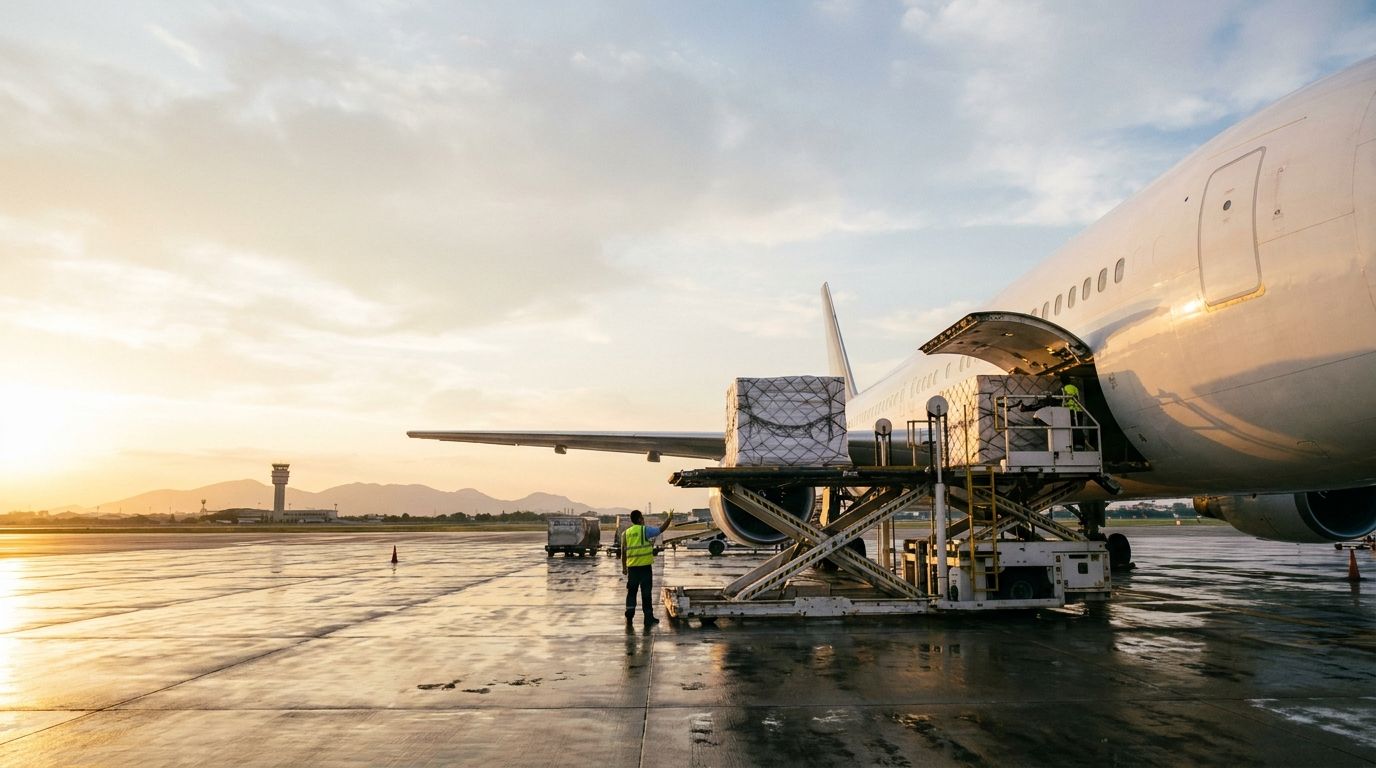
The carrier or forwarder issues the AWB after cargo acceptance and a document check. KAZLOGIST includes the air waybill in the standard workflow: pickup at the shipper, export customs formalities, AWB, space booking with partner airlines, delivery to the destination airport and to the consignee.
Read the data block, not the layout of the form:
- full legal shipper and consignee, address, contacts — matching invoice and contract;
- origin and destination airports, routing and carrier;
- number of pieces, actual weight, dimensions; volumetric weight = length × width × height (cm) / 6000; chargeable weight is the greater of actual and volumetric;
- cargo description in English, aligned with invoice and packing list;
- special-cargo marks: DGR, temperature, valuables, out-of-gauge;
- references to invoice, packing list and, where needed, permits.
A wrong consignee name or piece count almost always stalls release. Correcting an AWB after departure is not always possible and usually costs a day or more.
Why customs, the warehouse and accounting need the AWB
For import into Kazakhstan the set usually includes a commercial invoice with HS codes, a packing list (weight and dimensions per piece), the air waybill, a contract or underlying invoice; where required — a certificate of origin and permits. The AWB ties the physical cargo to the commercial papers: mismatched weight, pieces or description slows release.
The airport warehouse releases cargo against the AWB and the consignee’s power of attorney. Accounting uses the AWB as proof of international carriage. For dangerous goods under IATA DGR you need an SDS/MSDS, certified UN packaging and marks, and a shipper’s declaration; some items are cargo-aircraft only (CAO) — that must also appear on the waybill.
KAZLOGIST checks the document set before departure. That is cheaper than chasing a mismatch after arrival in Almaty or another destination airport.
Where money and time are lost: a pre-departure checklist
Typical losses are not “airline magic” — they are document-versus-cargo mismatches.
- Weight and pieces on the AWB do not match the packing list and physical acceptance — terminal reweigh, dwell, a dispute over who pays the difference.
- Description “samples / spare parts” with no detail — customs questions and extra-document requests.
- Consignee on the AWB is an individual while the contract is a company, or the reverse.
- No release contact: cargo arrived, the notice went nowhere.
- Consolidation without a clear HAWB: you search under the wrong number.
- Special cargo without the right codes and remarks: offloaded and rebooked.
Transit times are indicative and run from cargo leaving the shipper’s warehouse to release at the destination airport: Europe → Kazakhstan usually 3–5 days, China and Asia 3–6 days, Middle East 2–4 days, USA 5–8 days. Urgent moves are usually 2–3 days if space is available. Door delivery typically adds about one more day. A faulty AWB shifts these indications regardless of the flight.
How the rate is built and where the waybill sits
The airline charges the greater of actual and volumetric weight. The price includes the per-kg rate, fuel and security surcharges, terminal handling, AWB and export-declaration issuance, pickup and delivery. The exact figure comes from a manager after calculation: route, weight, volume, cargo type and urgency. There are no off-the-cuff ballpark rates — leave contacts; a calculation is usually within an hour during business hours.
There is no minimum weight: from 1 kg to large commercial lots. Legal entities pay under contract by bank transfer. We work with companies and private shippers from Europe, China and Asia, the Middle East and the USA; office in Almaty. Beyond door-to-door we handle special cargo, customs support, consolidation and re-packing, charter and hand-carry for urgent spare parts.
If you need a move into Kazakhstan, send the invoice, packing list and shipper contacts — we will price the route and issue an AWB that will not surprise you at release.